Can You File Bankruptcy Without a Lawyer to Stop Foreclosure?
By Bankruptcy for Foreclosure.com Editorial Team | Reviewed for legal context by David McNickel
Yes, you can file bankruptcy without a lawyer (pro se), but it carries significant risks in foreclosure situations. Learn when it’s possible, the risks, and where to access free legal resources.
Under U.S. law, individuals have the right to file for bankruptcy without legal representation, a practice known as pro se filing. All official bankruptcy forms are available for free at the U.S. Courts website. Many courts have self-help centers or clerk’s offices that can provide procedural guidance, though they cannot provide legal advice.
Pro se bankruptcy filing is more common in Chapter 7 cases and less common in Chapter 13, where the complexity of the repayment plan process makes self-filing more challenging.
The Self-Filing Process
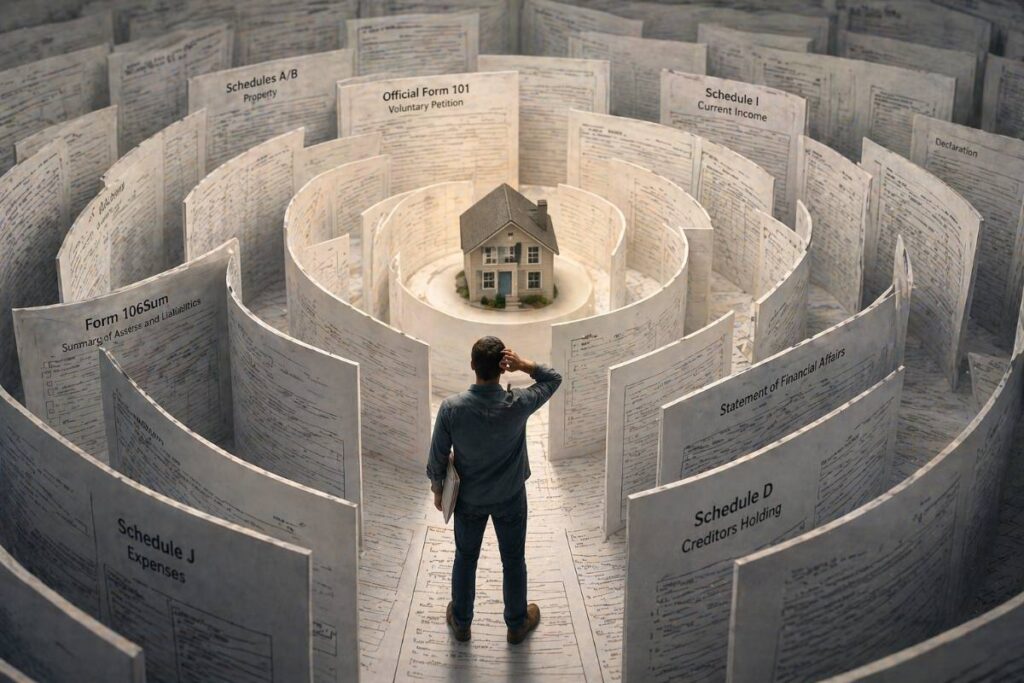
To file bankruptcy without a lawyer, you would: complete the required credit counseling course from an approved provider; download and complete the required official forms from uscourts.gov; prepare the creditor mailing matrix listing all of your creditors with their addresses; calculate the means test if filing Chapter 7, or prepare a Chapter 13 plan if filing Chapter 13; submit the petition and supporting documents to the bankruptcy court electronically (if you have PACER access) or in person at the clerk’s office; and pay the filing fee or submit an installment payment application.
After filing, you must attend the meeting of creditors, respond to any trustee questions, and manage any motions filed by creditors including any stay relief motions from your mortgage lender.
Risks and Errors in Pro Se Filing
Pro se filers in foreclosure situations face a specific set of risks. Filing in the wrong bankruptcy chapter for your goals is a common error, as is failing to claim applicable homestead exemptions, which could result in the trustee pursuing equity in your home. Omitting creditors from the schedule prevents those creditors from being bound by the discharge. Filing after the foreclosure sale has been completed, mistakenly believing bankruptcy can reverse it, is another frequent misconception.
In emergency situations, preparing a complete and accurate skeleton petition under time pressure is extremely difficult without legal experience. A technically deficient petition may be rejected by the court, meaning no case number is assigned and no stay goes into effect.
The consequences of these errors are serious: potential loss of the home, loss of exempt assets, unenforceable discharge, or a dismissed case that counts against you in future filings.
When Pro Se Filing Is More Feasible
Pro se filing is most feasible in straightforward Chapter 7 cases where the primary goal is discharging unsecured debts and there is no imminent foreclosure. In these cases, the required forms are relatively manageable and the consequences of procedural errors are less severe.
In foreclosure situations with an imminent sale date, the complexity and high stakes of the filing make attorney representation strongly advisable. The cost of a technical error in this context is losing your home.
Legal Resources for Low-Income Filers
Many low-income homeowners facing foreclosure qualify for free or reduced-cost legal assistance. Legal aid offices in most jurisdictions provide free bankruptcy representation to qualifying individuals. Eligibility is typically based on income being at or below 125 to 200 percent of the federal poverty level.
Law school bankruptcy clinics provide representation by law students supervised by licensed attorneys. These clinics often accept complex cases and can handle foreclosure-related filings.
Bar association lawyer referral services may offer reduced-fee initial consultations and can connect you with attorneys who do pro bono work. The American Bar Association’s Pro Bono Resource Center can also help identify local options.
Nonprofit housing counseling agencies approved by HUD can provide guidance on alternatives to bankruptcy and can refer you to legal resources. The HOPE Hotline (1-888-995-4673) connects homeowners with HUD-approved counselors.
Accessing any of these resources is preferable to self-filing in a complex or urgent foreclosure situation.
Read more on filing bankruptcy to stop foreclosure – processes, prices and assistance available.
The information on this website is provided for general informational purposes only and does not constitute legal, tax, or financial advice. Bankruptcy for Foreclosure.com is not a law firm and is not affiliated with any attorney, real estate professional, or government agency.